Three new assistant professors join the Department of Statistics as faculty growth continues
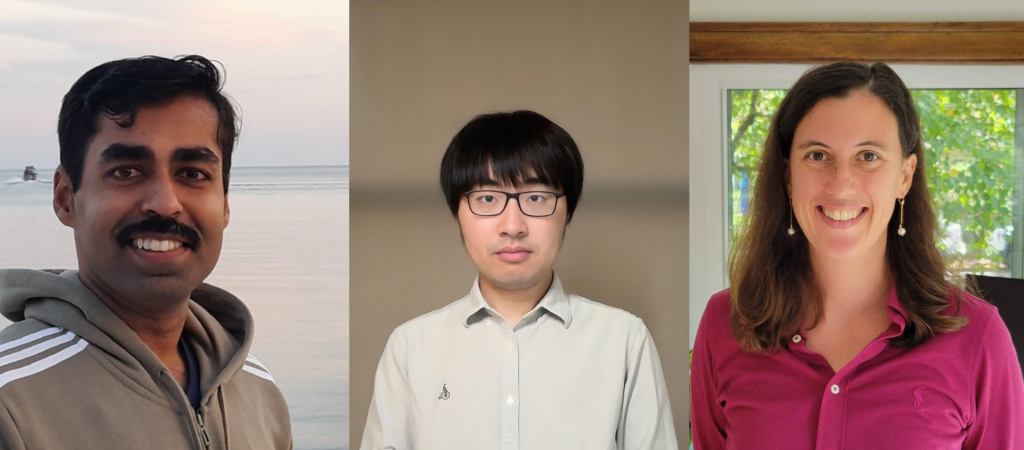
Three new faculty members have joined the Department of Statistics for the fall 2025 semester, reflecting the department’s rapid growth and increasing its teaching and research capacity around critical topics in statistics and data science. Bikram Karmakar, Xiao Luo and Maja Waldron come on board as the department transitions to its state-of-the-art new home, Morgridge Hall. Each of them bring a unique research focus and academic background to the department, adding even more breadth to an already diverse and talented group of faculty.
Learn more about each of the three new assistant professors below.
Bikram Karmakar
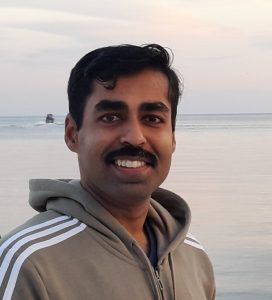
Background before UW–Madison: Karmakar earned both his bachelor’s and master’s degree in Statistics from the Indian Statistical Institute, one of the leading statistics institutions in India. At The Wharton School of the University of Pennsylvania, he earned his second master’s and PhD, where he combined theory with applied work in social policy and public health.
After a stint at the University of Florida, he applied to UW–Madison for its expertise across a breadth of domains and a chance to reunite with colleagues from his PhD years at Wharton, including Assistant Professor Sameer Deshpande and Associate Professor Hyunseung Kang.
Research focus and interests: Karmakar’s research expertise is in causal inference. In his research, he develops statistical tools to provide robust causal inference from complex real world problems. His work spans both theoretical and applied statistics and data science. On the applied side, he harnesses cutting-edge methods to study a range of topics, from the complex factors linked to autism and brain development in older adults to the effectiveness of digital marketing strategies.
“We as statisticians must engage deeply with crucial scientific questions,” he said. “We effectively contribute to science by developing robust statistical tools that address those questions.”
Teaching: STAT 311: Intro to Mathematical Statistics I. He plans to add some coding and real-world applications to the course to help students see how probability and statistics connect with modern computing and data science. This balance between fundamentals and practice mirrors his own research focus.
Outside of work: Karmakar enjoys drawing— a hobby he’s kept since childhood — and occasionally playing the tabla, an Indian percussion instrument. He was recently married and is settling into life in Madison with his wife.
Xiao Luo
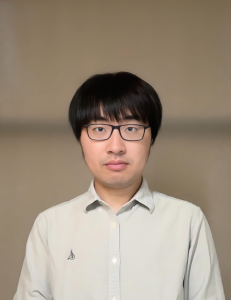
Background before UW–Madison: Luo earned his PhD in Statistics from Peking University and spent three years as a postdoctoral researcher in computer science at UCLA. He says UW–Madison’s reputation and vibrant research community drew him here.
“There are a lot of prestigious researchers whose work has profoundly shaped their fields, and I am excited about the opportunity to engage in such an inspiring academic community,” Luo said
Research focus and interests: Luo’s work sits at the intersection of machine learning, statistical modeling, and AI, with applications ranging from bioinformatics to AI for Science, or the integration of AI to transform scientific research. He focuses on building computational models that can both advance theory and power interdisciplinary discoveries.
Teaching: STAT 601: Statistical Methods I (Spring 2026). In the course, Luo will educate students on probability concepts and models as tools for studying random phenomena and statistical inference, as well as data analysis using current statistical methods and software.
Outside of work: In his free time, Luo enjoys playing board games as a way to relax, think strategically, and recharge outside of research.
Maja Waldron
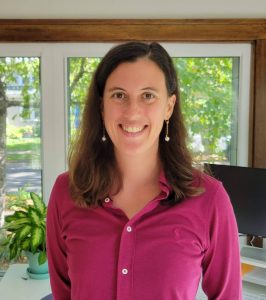
Background before UW–Madison: Originally from Germany, Waldron came to the U.S. on a volleyball scholarship at Delaware State University. She then transferred to MIT, discovering her love for computer science and machine learning. After earning her PhD at Columbia, focusing on deep probabilistic modeling of language data, she worked as an AI Researcher at the multinational company Bosch.
Waldron came to Madison when her husband joined the faculty of the Department of Mathematics; soon after, she found her own role as a Research Professor at the Data Science Institute. When the Department of Statistics announced it was hiring an assistant professor at the intersection of statistics and AI as part of the RISE-AI Initiative, Waldron jumped at the chance.
Research focus and interests: Waldron studies how to make current AI models more reliable and statistically rigorous. Her work has applied deep probabilistic modeling to study calibration in large language models (LLMs) and explores ways to use diffusion models—advanced generative models used primarily for image generation and computer vision—in scientific research.
“We need to build new statistical techniques to ensure that LLMs and other powerful AI models can truly unleash their full potential in safety-critical settings,” she explained.
Waldron is also collaborating with physicists and clinical researchers on campus so that her work addresses real scientific needs and leads to meaningful impact. She is currently seeking interested graduate students for collaboration on research projects at the intersection of statistics, AI, and the sciences.
Teaching: STAT 992: Statistics Seminar. This fall, Waldron is leading a graduate seminar on the statistical frontiers of foundation models and LLMs. She emphasizes giving students well-scoped projects that align with students’ own interests and learning goals. Rather than treating a paper as the only measure of success, she encourages students to follow their curiosity, gain confidence in research, and build skills that will serve them in future projects. “The goal is that, no matter the outcome, students walk away feeling they’ve grown as researchers and discovered directions they’re excited to pursue.”
Outside of work: Waldron enjoys biking around Madison and being a part of the vibrant intellectual community on campus. “It’s such an intellectually stimulating environment.”